We carried more to Sweden than a presentation when we boarded the plane as finalists for the 2026 Food Planet Prize. Created by the Curt Bergfors Foundation, the Food Planet Prize is the world’s largest environmental award, recognizing innovations capable of transforming how the world produces, distributes, and consumes food. Drawn from more than 1,000 nominations worldwide, the recognition felt both humbling and deeply meaningful.
We brought with us the stories of farmers who have helped make organic food possible for California schools, the leadership of school food teams who do the hard work of changing what students eat every day, and the voices of students, families, chefs, distributors, partners, and advocates who have helped shape Conscious Kitchen from a bold idea into a growing movement.
What we did not fully anticipate was stepping into a truly global conversation about the future of food.

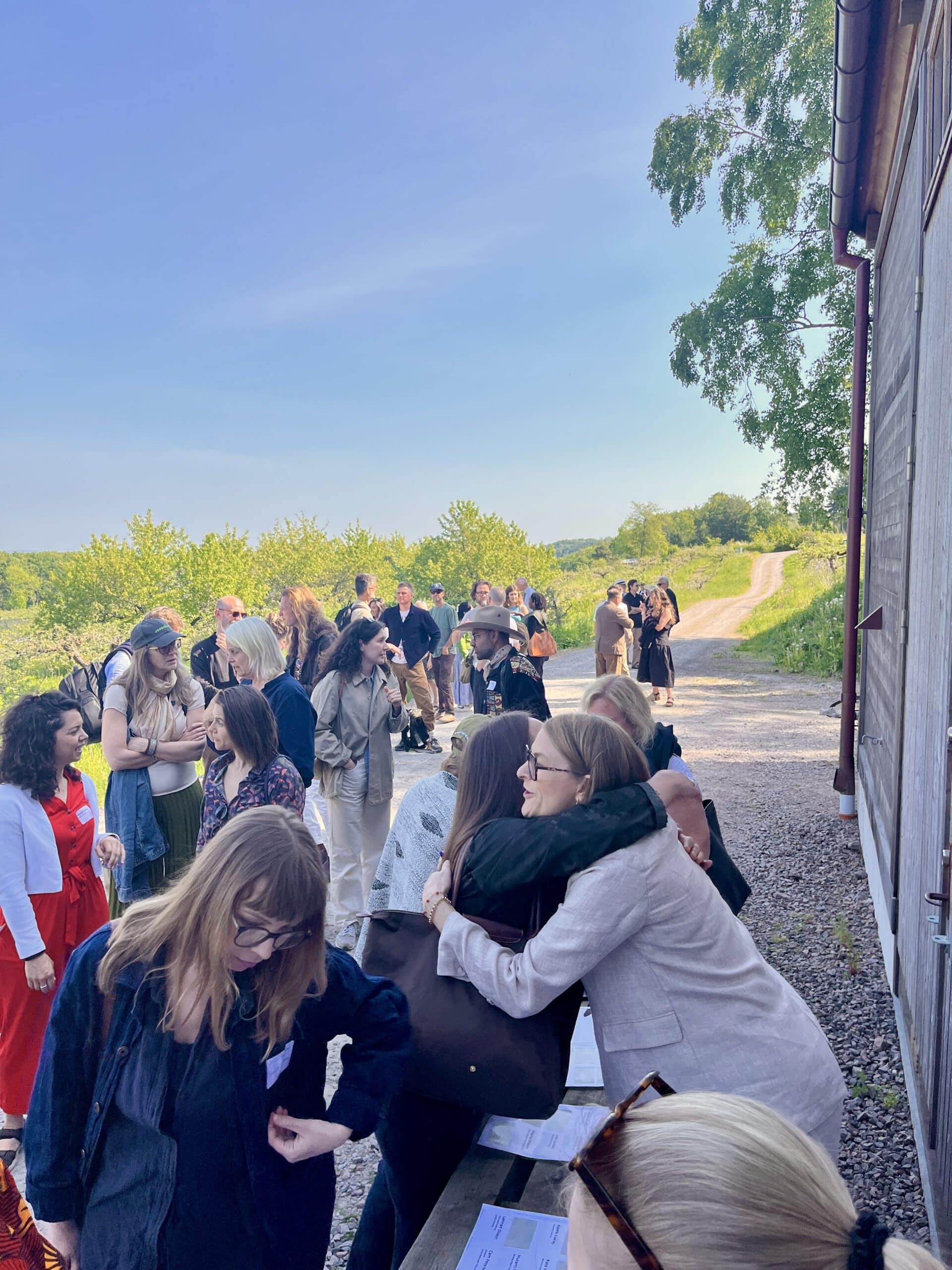
There we were, our team, led by Judi Shils, Conscious Kitchen’s founder gathered in the magical seaside town of Båstad alongside fellow finalists, former winners, jury members, scientists, farmers, entrepreneurs, philanthropists, chefs, journalists, and food systems leaders from around the world. The scale of the gathering was remarkable, but what stood out most was not its size.It was the collective sense of purpose.
Across every conversation, panel, meal, and presentation, a common thread emerged: the future of food is ultimately a question of collective choice. The systems that surround us today were built through decades of decisions, priorities, and investments. Creating healthier, more resilient food systems will require the same level of intention, collaboration, and long-term commitment.
That idea has always been at the heart of Conscious Kitchen.
We began in 2013 with a single school in Marin City, a school that remains 100% organic to this day. From one cafeteria, we have built the institutional supply chains and infrastructure needed to bring organic school food to more than 1.8 million students across 112 California school districts, with our reach, partnerships, and impact continuing to grow. That arc, from one school to more than a hundred districts, reflects what is possible when schools, farmers, and communities work together toward a shared vision.

We came to share the impact of fresh, local, organic school food in California – how school meals can be a powerful tool for nourishing children, supporting farmers, strengthening local economies, and stewarding the land. We also shared how public food procurement can help reshape what is grown, how it is grown, and who benefits from the system. School food, we told them, is not just about what appears on a tray. It is about health, equity, climate, resilience, farmer livelihoods, and the values we choose to invest in.
To have that work recognized through the Food Planet Prize was an extraordinary honor. But even more meaningful was seeing how deeply it resonated in a global context.
The other Food Planet Prize finalists represented distinct and powerful pathways for transformation. NoPalm Ingredients is reimagining alternatives to palm oil through yeast-based innovation. Savanna Institute is advancing perennial agriculture and agroforestry across working landscapes. Andhra Pradesh Community Managed Natural Farming (APCNF), this year’s Food Planet Prize winner, is supporting a women-led natural farming movement at remarkable scale, mobilizing enormous numbers of farmers across India.
In presenting this year’s finalists, Jury Co-Chair Lindiwe Majele Sibanda spoke about solutions the prize is designed to elevate: those capable of transforming food systems to operate within planetary boundaries while securing healthy, equitable, and resilient futures. She described the four organizations as distinct yet complementary pathways toward that shared goal.
Each model was different, emerging from its own place, context, and community. Yet together, they pointed toward a shared truth: there is no single solution to the challenges facing our food system. Transformation requires many approaches, rooted in place but connected by a common vision.
That was one of the most powerful lessons we brought home.

The work ahead is about building systems that are more alive, more equitable, more resilient, and more connected to the people and places they serve. It is about honoring local knowledge while learning from global movements, and understanding that school cafeterias, farm fields, public institutions, and policy tables are all part of the same conversation.
Throughout the convening, we heard discussions about food affordability, farmer livelihoods, biodiversity, food sovereignty, climate resilience, public policy, and the role of markets in shaping what societies grow and eat. Again and again, we found ourselves thinking about California schools.
Every day, 6 million students in our state rely on school meals. That makes school food one of the most important public food systems in our nation. When institutions choose fresh, local, organic, seasonal, and nutritious food, they create demand for a different kind of food system — one where students deserve meals grown and prepared with care, where farmers deserve stable markets and fair partnerships, and where soil health, biodiversity, farmworker wellbeing, and public health are understood not as separate issues, but as facets of the same whole.
One of the most powerful ideas we encountered in Sweden came from keynote speaker, academic, filmmaker, and author Raj Patel, who challenged the group to think about food not only as a commodity, but as infrastructure. For those of us working within the school food system, that framing felt especially powerful. Infrastructure is something we build because society depends on and invests in because it shapes daily life, and is expected to serve the public good.
What if we treated school food that way?

What if every cafeteria was understood as part of a larger public health system, a regional food economy, a climate strategy, and a commitment to the next generation? What if procurement was seen not as a back-office function, but as one of the most powerful tools we have to shape the future of food?
In many ways, Conscious Kitchen’s work has always addressed these questions in practice. We have seen what happens when schools become meaningful markets for organic farmers. We have seen students light up when they meet the people who grow their food. We have seen food service leaders step into their power as changemakers. We have seen how a single meal, district, partnership, or procurement decision can create ripple effects far beyond the cafeteria.
Our trip to Sweden reminded us that this work is both deeply local and profoundly global. We came home with a renewed sense that this movement is part of something much larger — that around the world, people are working to move food systems away from extraction and toward regeneration, away from isolation and toward community, away from short-term efficiency and toward long-term care. This is a new lens through which we will continue to grow and evolve our work.
We are grateful to the Food Planet Prize team, jury, finalists, past winners, and global community for creating such a meaningful space for exchange, learning, and collaboration. We offer our deepest congratulations to Andhra Pradesh Community Managed Natural Farming (APCNF) on receiving the 2026 Food Planet Prize, and for their extraordinary work with farmers across India.
And most of all, we return with gratitude for the Conscious Kitchen community: the farmers who grow with such skill and dedication, the school food leaders who keep pushing possibility forward, the chefs, distributors, educators, funders, policymakers, families, and partners who continue to believe in this work, and the students who remind us, every day, why it matters.
This recognition belongs to all of you.
The future of food is not something far away. It is being built now, one school meal at a time.