

Our Roots
Conscious Kitchen launched in 2013 at Bayside MLK Academy in Marin City, an unincorporated, food-insecure neighborhood nestled in one of the most affluent counties in the United States. More than 95% of students qualify for free and reduced meals, and 58% of fifth graders are overweight or at risk of obesity. Starting with a seemingly impossible goal, Conscious Kitchen partnered with the Sausalito Marin City School District, Executive Chef Justin Everett of Cavallo Point Lodge, and Good Earth Natural Foods to transition from heat-and-serve, processed school food to fresh, local, organic, seasonal, and nutritious meals.
By 2015, the program expanded to a second site, forming the nation’s first 100% organic, non-GMO school district. The program is accompanied by an interdisciplinary curriculum that takes students from seed to fork, building the knowledge and habits that support healthy, productive lives.
.Model Expansion
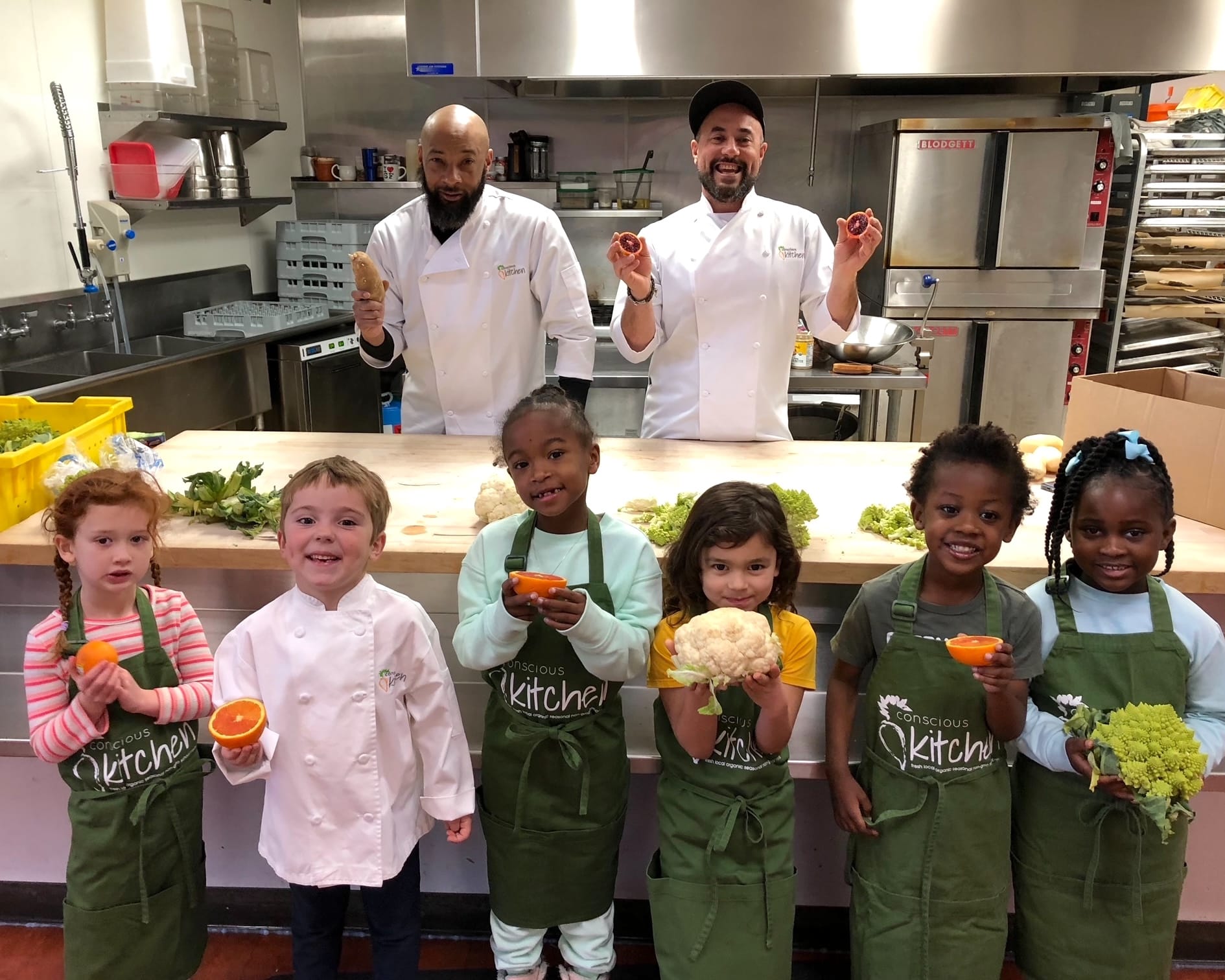
This model was later expanded to West Contra Costa Unified School District (WCCUSD), a large, diverse district where a majority of students live below the poverty line. During the COVID-19 pandemic, Conscious Kitchen rapidly scaled its work—partnering with WCCUSD to source, pack, and distribute over 10.7 million pounds of organic food, delivering 18.7 million meals and investing more than $17 million into local farms and food businesses. This moment demonstrated that organic, values-driven supply chains are not only possible at scale, but essential for community resilience.
Today, Conscious Kitchen works with more than 112 school districts across California, reaching more than 1.8 million students and building the infrastructure needed to make organic school food a reality at scale. Our work sits at the intersection of agriculture, public health, and education, transforming how food moves from farm to school.
We focus on building practical, scalable systems that allow organic food to work within real school budgets and operations.
Our Initiatives
Expanding Organic Procurement at Scale through the Department of Defense
Conscious Kitchen has helped unlock new procurement pathways that make it easier for school districts to purchase organic food through existing systems. Through partnerships with distributors and public agencies, we have supported the introduction of 36+ organic items into the Department of Defense Fresh channel and helped drive nearly $6 million in organic produce purchasing by California school districts over the past four years—with significant year-over-year growth.
Building a Statewide Organic Purchasing Cooperative
We are leading the development of California’s first Organic School Food Purchasing Cooperative, aggregating demand across districts to secure better pricing, streamline procurement, and make organic products more accessible. We are also working with organic food companies to create products specifically for schools. This model is designed to shift organic food from a premium niche to a standard offering in school meals.
Strengthening Farmer Access to School Markets
We work directly with organic and regenerative farmers, especially small and mid-sized producers, to help them access institutional markets. Through technical assistance, aggregation models, and distribution partnerships, we are creating reliable, long-term demand for local farms while ensuring schools can source consistent, high-quality products.
Culinary Training & Menu Transformation
In partnership with the Alice Waters Institute and others, we host hands-on culinary workshops that equip school food leaders with the skills and confidence to cook from scratch using organic, seasonal ingredients. These workshops have engaged dozens of districts and directly contributed to increased organic purchasing and improved meal quality.
Innovating Supply Chain Solutions
From launching the nation’s first USDA-compliant organic bulk cereal for schools with Nature’s Path to piloting minimally processed products like chopped organic lettuce, we work with food companies and processors to design products that meet the operational needs of school kitchens—bridging the gap between farm production and institutional requirements.
Driving Policy & Systems Change
We collaborate closely with partners including the California Department of Food and Agriculture (CDFA), California Department of Education (CDE), and leading nonprofit organizations to align funding, policy, and implementation. Our work helps shape statewide strategies that support farm-to-school programs, expand organic access, and reduce reliance on highly processed foods.
